Friday, August 3, 2012

Kalangala Leaders impress Technology for Social Accountability


A Team of CSO representative  on Wednesday 1 August 2012 met  with representative of the District Leadership of Kalangala to discuss issues on  how ICT support citizens access to information and feedback mechanism to strengthened social accountability.
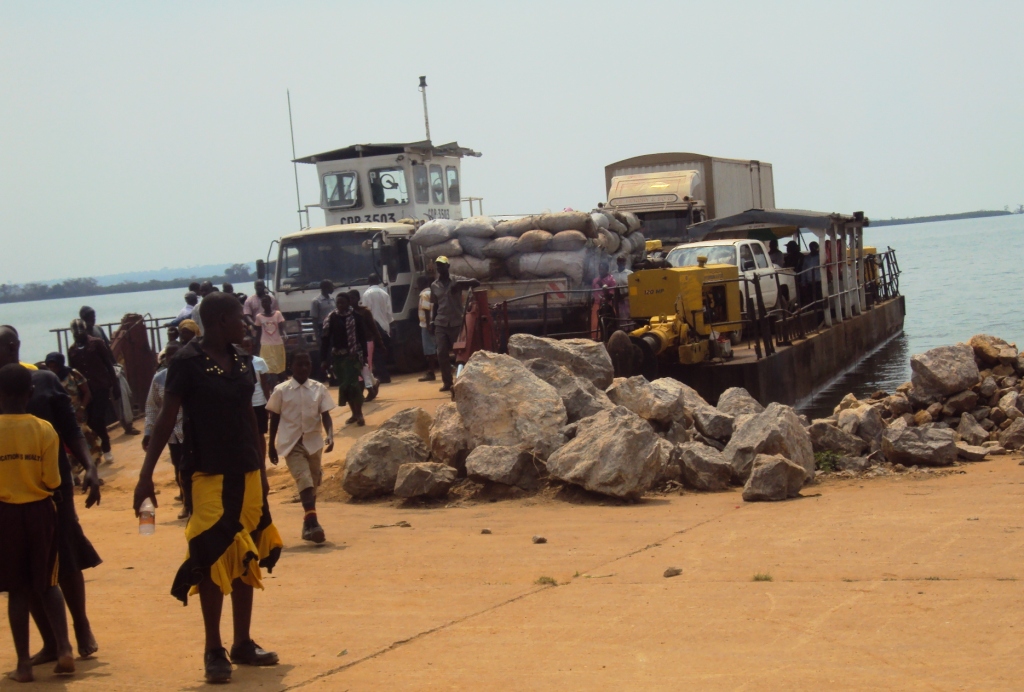
on possible means of transport  to the Kalangala;  ferry in Bukakata and small boats between islands.
This was part of the Social Accountability project  implemented CEW-IT and partners in 25 District of  the 5 regions in Uganda with support from  EU, HIVOS and DGAP (Government of Uganda).

Mr. suliaman, Mr. Fedrick (D/CAO), John Silco (RIC-NET), Mr. Bulemezi 
 The team which comprised of Ms Rose Nayondo from Foundation for Human Rights Initiative (FHRI), Mr. Ssenyojo Suleiman from Kalangala Human Rights Defenders (KHRD) and Mr. John Silco from RIC-NET had a round table discussion with Ms.  Ssembiya Fausta the District vice Chair Person, Mr.  Wanje Micheal the Deputy CAO and Mr. Balemeezi Fredrick the Principal Assistant Secretary.

The CSO representatives introduced the planned online and offline platforms that will support the District leadership to enhance sharing of timely and credible information.  These includes support for the District website development, the District e-library, the  District bulk sms, hosting leaders on Radio programs, support to District interface meeting  with CSO and the Citizens; conducting  Neighborhood assemblies (Barraza)  and support to citizens feedback platform http://www.citizensvoice.ug  using the 6030 short code.
Ms Fausta (in White) the Vice Chair Person of Kalangala District

 Ms Rose  (FHRI) explaining a point to the  D/CAO
The Vice Chair Person was impressed with the package but asked the team to stress the radio programs and the Baraza (neighborhood assemblies). She pledged her office support and participation in providing credible information to the citizens.


On his part, the D/CAO was happy with bulk sms support, he believed that this will help his office to offer alerts and reminders to both staff and citizens. He highlighted that another problem in the District is HIV AIDS prevalence believed to be very high. He revealed that out of the 10 suspected rapists or rape victims, 7 have been found HIV+,; so a ration of 7:10 if this group can be taken as a sample.

He raised concern that the citizens’ feedback platform should have a clear verification of reports mechanism to ensure that the citizens’ reports are also credible. The D/ CAO promised District support to ensure that the results of the project are sustained and agreed to fast track the review of the MOU  with FHRI.

Om his part, Mr. Fredrick reported that Kalangala website www.kahangala.co.ug is no longer functional and the support has come at the right time. He revealed that the costs of delivering services in Kalangala  is high since most of the travels are by water which uses twice the fuel used on road transport.

Action needed are: to have  the District input in the MOU within in two weeks,  to start the official process of getting the administrations rights of the domain name, the CSO to start designing the  Mockup site and arrange subsequent visits. 
The struggle to reach the ferry in time
 The District Vice Chairperson requested for an increase in the number of sub –counties under the Social accountability project and involvement of more citizens. 
She commended the work of FHRI in the District and the local partner KHRD.
On their party, the CSO were very grateful to the willingness of Kalangala District support to the project and hopped that with such support the  citizens voice in social accountability will be pronounced.

KOBOKO AND ARUA DISTICTS LEADERS SUPPORT CEFFORD CONTRIBUTION ON E-SOICETY.

ENHANCING CIVIC COMPETENCE TO STRENGTHEN SOCIAL ACCOUNTABILITY IN 25 DISTRICTS, IN FIVE REGIONS OF UGANDA” is an EU funded project and one of it’s components is the design of District websites and E-libraries where RIC-NET is mandated implement  on behalf  of CEW-IT.
    The core objective of these websites is to strengthen information sharing within the Districts and with partners outside the District The key roles of RIC-NET includes; Sensitizing and training District leaders and staff on use and value of websites;  Domain name registration and hosting fee payments;  Designing and building dynamic websites for Districts;  Designing and development of E-libraries for the Districts;  Integrating web 2.0 tools and other social media such as twitter, face book, youtube,d-group with district website;  Integrating website issues with Huduma and bulk Sms.
Interface meetings with District leaders
Two districts were selected for the first round of meetings and that was Koboko and Arua.
 Koboko District

The meeting took place on 9th July 2012 at Koboko District headquarters in the Chairperson’s office. In attendance were:
S/N
Name
Title
Sex
01.
Hon. Nginya Hassan Said
District Chairperson
M
02.
Mr. Asenda Patrick
Assist. C.A.O
M
03.
Ms Adraa Gloria winnie
Dist. Information officer
F
04.
Hon.Mukili
Secretary Social services
M
05.
Hon. Innocent Paul
Deputy speaker
M
06.
Mr. Abele Emmanuel Moro
P.P.O
M
07.
Hon. Goro Grace
Vice C/person
F
08.
Mr.Albert
Prog.officer CEFORD
M
09.
Mr.M John Silco
Executive Director RIC-NET
M
10.
Mr. Okuti Richard
Partner RIC-NET
M
11.
Mr.Yosia Baluku
ICTO-RIC-NET
M
  The roundtable meeting discussed  the District website that was provided by UCC  which has not been active for a while and needs redesign and activating www.koboko.go.ug. The E-library as a component of the website and way of cooperation and sharing information and responsibilities during the implementation period. The training component that will ensure that the District Staff update the website and other components them selves was stressed as a sustainability aspect.
The  highlighted  challenges included the lack of ICT equipment  for the District Information officer; unreliable internet connectivity; inadequate technical knowledge, finances among others.
The District chairperson appreciated the CSO work and pledged   total cooperation  of District the leadership  to have this fulfilled in the quickest time possible.
Way forward
    A Draft  M.O.U shared was to be reviewed and signed between Koboko District and CEFORD. The District focal person to start collecting current information from departments so as work to become much easier and quicker as it starts. District information officer mandated to be the focal person for this project.  the Mockup  design and development of the online platforms commences immediately. The District  CAO  to write to UCC to get the administrative rights of District website and Domain name.
Arua District Local Government
The meeting was held between (2:30pm) of 9th July 2012 in the Chief Administrative officer at the District headquarters. In attendance were:
S/N
Name
Title
sex
01.
Ms. Sarah O
Senior Assistant secretary-CAOs office
F
02.
Ms. Achan Stella
District population officer
F
03.
Hon. Achema Genesis
District speaker
M
04.
Ms. Megwe Jane
District information officer
F
05.
Ms Faridah
Project officer CEFORD
F
06.
Mr.John silco
ED RIC-NET
M
07.
Mr. Ayayo
Officer CEFORD
M
08.
Mr. Okuti Richard
Partner RIC-NET
M
09.
Mr. Yosia Baluku
ICTO-RIC-NET
M
The senior Assistant secretary from the CAO’s office

The  concept of the ICT component in this project “ENHANCING CIVIC COMPETENCE TO STRENGTHEN SOCIAL ACCOUNTABILITY IN 25 DISTRICTS, IN FIVE REGIONS OF UGANDA” was shared and components as  the re-design of the District websites and e-libraries. 
These online platforms would be support by training of the District focal staff in updating and use of the platforms.
  Feedback from the citizens was to be captured through the  www.citezensvoice.ug  a web based platform that use the  sms. The bulk sms platform to be added to support the District to send sms alerts and reminder to the public and District Staff.
The District officials  represented by the District Speaker appreciated and welcomed the project and pledged for maximum support and cooperation.
Way forward
Ø  An M.O.U is shared and more input be made by the District leadership and later signed between Arua District and CEFORD.
Ø  The District focal person for this project to be appointed by C.A.O and that the D.I.O  is by default part of the team.
Ø  The design and development of the online platforms commences immediately after the signing of the M.O.U
Ø  C.A.O writes to UCC to get more Administrative authhorities  on the previous District website.      

Will Inclusive education deliver its intended results in Uganda?


The minister of Finance, Planning and Economic Developed Hon. Maria Kiwanuka delivered her second budget speech to a fully packed house on  14th June, 2012.  The events that unfolded immediately after Hon. Maria Kiwanuka left many questions un answered. While giving his speech during the budget day, H.E Yoweri MK, the president of the republic of Uganda, was left puzzled by why Uganda was still importing ‘dressed chicken’ while Uganda had all the resources to supply chicken to the market, the other question was why should Ugandans export ‘maize grains’ instead of exporting maize flour or other products. It seems the Minister of Trade, Hon. Amalia Kyampade took note of the presidents concerns. I was in Mwanza, Tanzania during the budget speech, but quickly followed the events on internet and later downloaded the budget speech from the Ministry of Finance website, something that has embraced me to follow events in my country even when miles  away.
Immediately after the budget speech, Uganda joined the rest of the African countries to commemorate the International day of the African Child on 16th June, 2012 under the theme “THE RIGHTS OF CHILDREN WITH DISABILITIES: THE RIGHT TO PROTECT, PROMOTE AND FULFILL” I had participated in the preparatory meetings in  Kasese district, Western Uganda but because I had another international assignment, I left but had a mind of following all the events since an IT team had been informed of uploading  the events on the blog and youtube.  Kasese was chosen to host the regional celebrations for the Rwenzori Region covering seven district of Kasese, Kabarole, Kamwenge, Kyejonjo, Ntoroko, Kyegegwa and Bundibugyo. I also followed the events on a blog story provided by Rwenzori peoples’ voice: http://rwecovoice.blogspot.com/2012/06/plight-of-vulnerable-children.html and you tube. Indeed, 16th June, 2012 will remain a memorable day in the lives of the pupils who participated in commemorating the international day of the African Child  in Kasese district.
Figuur 1. Andrew Bwambale of Rukoki Model P Sch. Kasese district
Being a concerned and patriotic citizen, I watched the video and followed up the activities and made phone calls to some participants to find out the conditions of the pupils that show cased their skills at the celebrations. One of the pupils that I followed was Andrew Bwambale (12) a P.4 pupils at Rukoki Model school. I made a phone call to the head teacher to find out how she manages to train the pupils, the government contribution and other requirements for such pupils.  The head teacher, Rukoki Model Primary School, was frank to say that, Andrew was a determined pupil ready to confront any challenges in his education career but was challenged to get the necessary support to see him through his dreams of education. I hanged up and reflected back on the budget which Hon. Maria Kiwanuka presented few days back before celebrating the Day of the African Child. I browsed through the budget: Section C, 63:

Madam Speaker, the education sector has the largest share of our national budget with a total provision increasing from Shs 1,418 billion  in the current financial year to Shs 1,669 billion in the next financial  year. This amounts to 17% of the total budget. The sector provision will  also cater for salary increases for Primary School Teachers and Science  Teachers in Post O-Level institutions. I have allocated Shs. 290 billion  for teachers, scientists and other civil servants”.

Primary school pupils in kids athletics competitions in Kasese
But what did the head teacher share with me “ Andrew lacks support, he has no wheel chair, he has lost his limbs, but determined to study, I call upon members of the civil society to support this boy” I wondered whether the government proposal of inclusive education will  deliver to the expectations of such pupils like Andrew who are struggling amidst all odds to keep in school. Surprisingly, when I observed Andrew in the photo above, it shows how such pupils are capable of joining the job market and compete with the rest of the skilled labour force that we currently have. As a pro-poor analyst, I checked the Kasese district budget that was approved by council on 24th July of which Ugx 5bn out of Ugx 41bn was allocated to the education sector, but surprisingly only Ugx 1.500,000/ had been allocated to sports and music. I am still left puzzled like my senior citizen Mze. HE Yoweri KM who could not believe that Ugandans still import chicken despite the God given environment that is good for agriculture and poultry rearing. Can Ugx. 1.5m deliver the district sports team to national standards, what about the likes of Andrew who needed special consideration which was not reflected in both the district and national budgets? 

Its time now for Ugandans to see where we put our priorities, the education sector was ranked to take the biggest part of the national budget, who will benefit from this budget? While, Uganda was proud to present success stories in the Universal Primary Education program with enrolment now at 8,098,177 ( Education Statistical Abstract, 2011), the challenge is still what are our priorities if we must attain the education goal of providing relevant quality education to all Ugandans. Will Andrew and his friends benefit from this if inclusive education is top on the agenda? I believe, affirmative action  was the best to children with disabilities. Take the case of sanitary facilities at most of the schools, whereas, government policy is clear on these elements of disability but how much has been achieved to cater for individual disabilities even within the cluster of children with disability. Let us not shy away from the truth, if we keep making blanket statements, our children who are disadvantaged will not see the benefits of Education for all.

I have keenly followed the trends in the reports of the presidential special committee investing the abuse of Universal Primary Education and Secondary Education, colossal sums of money has been put to waste! Who is to blame?  Mr. Moses Byaruhanga, Senior Presidential Advisor, has questioned why our MPs are taking all their time to debate the succession question ( see newvison August 2, 2012).  I want to share with  Mr. Moses Byaruhanga that debating is good for our young generation and politicians. If the public had not been questioning the delivery of services, President Yoweri MK could not have known about the gaps in the Naads , Education and Health sectors. Let us give room for debate and question government to look beyond figures,  if these figures can be  translated into facts. I will ask also another question to the minister of Finance. Hon. Maria Kiwanuka, will the Andrews of this Uganda benefit from the 17% budget allocation to the education sector if you don’t allocate  special needs education specific budget that can be tracked?

The resource envelope for the Ugandan budget 2012/13 is enough if government ensures that leakages within the delivery systems are blocked. According to the world bank report, Uganda loses close to Ugx. 500bn per annum in contracts gone bad. Prof. Augustus Nuwagaba, while presenting at the launch of the activities  to mark 50 years of Uganda’s independence was quick to say “ let us make corruption a risk venture instead of glorifying the corrupt”  how many children with disability would benefit from Ugx. 162bn that was awarded to one individual, or even the recent scam in the Office of the Prime Minister. Ugandans what has gone wrong, the world is not about to end. Play your part, tomorrow is there for us. While its clear that those in position of leadership are not in touch with the realities in the country side, Uganda is there for us all to enjoy despite  our status. My message is, after 50 years of independence can we give a chance to the likes of “Andrew to live” and take part in the development agenda of our country Uganda.


Jimmy Baluku Odyek
Poverty and Policy Analyst and works with Rwenzori Consortium for Civic Competence
Kasese, Western Uganda.
Email:jimodyek@gmail.com

Friday, June 1, 2012

CITIZENS MANIFESTO DAY IN KAMWENGE DISTRICT

RWECO organized a Manifesto Day in Kamwenge District at Kahunge sub county headquarters on the 29th May 2012. The event was jointly organized by RWECO member KALI in close collaboration with the partner CBOs and the office of the Speaker Kamwenge district. The objective of the event was to create a platform for citizens to interface with their leaders and engage them on how far they had gone in implementing the Citizens Manifesto one year after getting into office; it was also an occasion for the leaders to provide feedback on government programmes that they were being implementing in the district.
The event included citizens presenting a written report of what they had observed leaders deliver in the past one year. On the other hand leaders also presented their own reports showing how they were progressing with the implementation of their manifestos. An interactive session moderated by Patrick Kamara, a seasoned media moderator, followed the presentations. At least 23 citizens raised issues which were responded to by the elected leaders and civil servants in four separate rounds.
Attendance : about 200 men and women
Categories:
a)     Elected leaders: LCV Chairman, District Executive Committee, district speaker, Councilors; LCIII Chairpersons of 5 sub counties, LCIII Councilors, LCII and LCI Officials. The area MP Frank Tumwebaze – Kibale County, participated in the meeting vial telephone link.
b)    Civil Servants: DPC, District Inspector of Schools, District NAADS Coordinator, Sub County Chiefs of 5 sub counties, Sub County Community Development Officers, parish chiefs, head teachers, teachers
c)     Religious leaders: Christian and Muslim
d)    Civil Society Organizations: CEW-IT Coordinator, RWECO members, District NGO Forum, CBOs, and other community groups
e)     DGAP PMU: Programme Manager
f)     Ordinary citizens – mainly from the neighbourhood

Highlights of the Citizens’ Report
Members of the CBOs working with RWECO in Kamwenge district compiled a report of what they had observed their leaders deliver or failed to deliver in view of their campaign promises. The report was aligned to the citizens’ manifesto.
Citizen issues as outlined in the CM
  1. Wide  spread corruption
  2. Wide  spread poverty
  3. Declining fortunes of the  Agricultural sector
  4. Environmental degradation and climate change challenge
  5. Poor infrastructure
  6. Growing un employment  opportunities
  7. Break down in the health delivery system
  8. Poor quality education and mismatch with Uganda’s needs
  9. An unsustainable population growth rate in Uganda
  10. Very low levels of civic consciousness.
Specific Needs for the people of Kamwenge
  • Fight corruption
  • Poverty eradication through income generating activities e.g. SACCOs
  • Increase agriculture production
  • Environment protection
  • Health – quality health; adequate staffing in the all health centres – HCII, III, IV; district hospital; eradication of neglected tropical diseases such as elephantiasis
  • Quality education – at primary and secondary level
  • Partnership and collaboration among politicians
  • Relationship between the protected areas and the frontline communities
  • Infrastructure development – rural feeder and access roads, tarmacking the Kamwenge – Fort Portal Road
  • Rural electrification
  • Access to safe and clean water
  • Land question – surveying and acquisition of land titles

SUMMARY OF FINDINGS BY THE MONITORS, ISSUES RAISED IN THE PLENARY DISCUSSIONS AND RESPONSES BY THE LEADERS

By James Mwirima, National Coordinator , CEWIT

Wednesday, May 23, 2012

ICT TOOLS FOR POVERTY RESOURCE TRACKING


CEW-IT training in Progress (17-19, May, 2012)
It was a bright Thursday morning, dazzling in their glamorous suits the CEW-IT staff walked down the road to Kireka, Eastern route Hotel where the very colorful and down to earth two days training on ICT based PETS/PRMT monitoring tools on poverty eradication scheduled for the 16th – 19th may 2012 was held.
Moving around the clock, all the trainings were stipulated to commence at 8:50am this was highly blessed by all the CEW-IT partners among which included; RWECO, ACORD, PAC, CEFORD, and FHRI whose delegates elegantly stepped in very early and prepared for the long waited training. The training was further blessed by delegates from Oxfam, SODNET, and the very well experienced and down to earth facilitators from the Democratic governance associates of Uganda.
So fruitful were the opening remarks from James Mwirima the CEW-IT Coordinator. Who welcomed participants to the training and also took them through the climate setting session, his words were so good that gave hope to participants to keep hoping and expecting for more and more, and in the end all their expectations were met 80%.which was an achievement to CEW-IT. James Mwirima further explained the composition of CEW-IT as a consortium of 4-6 organizations, and notified the participants that the name had changed from Citizens Election Watch, to Citizens Watch IT Uganda which had changed for the better not for worse.  He also commended EU and Hivos funding for the project, Enhancing Civic Competence for Social Accountability. 

Mr. Eddie stressing a point
 In life, we always hope for the best  participants highlighted various expectations  which included; acquiring Knowledge on CEW-IT phase three, active participation and knowledge sharing, knowing how public service is in other districts, learning mechanisms and approaches of the project, how to influence the government to increase budget funding, acquire more knowledge and skills in monitoring, Share monitoring experience, how to monitor poverty eradication using ICT, how social goals are generated in service delivery, how to influence budgets in terms of budget allocations, gaining hands on skills in data entry, acquiring knowledge on PRMT.
Though some fears were highlighted, in the end they all turned to be reasons of appreciation when participants were introduced to the Huduma (Swahili) platform—which simply means social service delivery in English, this term has done a great deal of work in Kenya via accountability and access to social services are concerned, we greatly hope that since we have adopted it, the fruits will be ripe as well in Uganda.  And guess what! thanks to Penninah Mutuneh from SODNET for the good work done in putting her hands together in preparing the presentation. Ugandans at last will use the cheapest means to monitor and report on service delivery by local governments. Thanks to the CEW-IT, ICT Specialist Emmanuel Oluka, who tirelessly and nervously shared the strong idea of the Smart phone, for sure this was another milestone for CEW-IT, he simply explained that all one needs is to go down to a shop pick a phone and you know what? identify any social issue around the are, then send that very issue in a message to the short code 6030,  and behold there is no bureaucracy needed or any transport, all you require is just the lowest air time to send a message, so tell me will you send the message today?

Below  Mr. Muguzi facilitating at the CEW-IT workshop

The workshop covered various topics in the field of social accountability, which left most participants amazed, these very interesting topics included; Overview of the Budget Formulation and Implementation Processes (Central and Local Government), which focused on how budgets are formulated and implemented and how CSOs could influence them. The session which was  moderated by Henry Mugazi and  Eddie Kayinda brought on board the mechanisms of monitoring social accountability aimed at building strong networks in the Country and building internal capacity of CSOs in understanding how government operates, thereafter social goals  of service delivery, the roots of service delivery problems, budget formulation at national and LG levels, identification of common problems in budget processes, social services provision framework, and the mechanisms in budget and service delivery monitoring, PETs and their importance, planning and execution of PETS, Data Verification, Report writing, and how to integrate PETS into issue based advocacy, ICT monitoring tool, The HUDUMA Platform (over view, deployment and roll out), Information Analysis and Minimum Standards/Performance Indicators of Public Services
As you know there times when one can’t fail to smile despite the condition you are in that was the situation on Friday 18th May 2012. On a brand early morning when participants were notified that they were required to go to the field (schools, hospital, district head quarters, water points) to pre-test the PET tools,  guess what Huduma in action  was the buzzword allover the corridors of Eastern Route hotel.  Participants jumped into the ‘Matatus’ courtesy of Rose Nanyondo who was the transport manager of the day headed to four distinct destinations to pre-test the tools.  Field results were presented and they were self explanatory for indeed the situation in almost all the places that were reached unto had issues of limited social service delivery, that significantly showed that the project of social accountability indeed has come in the most opportune time it was  needed therefore, strong implementation has to be made, effective monitoring has to be done, to ensure that all Ugandans access the basic social services they are entitled to.
In a nutshell, the training was necessary for Uganda, we your friends at CEW-IT CU, pray that it may be a success story as we implement together with all our partners alongside the citizens.

By Olive K
CEW-IT-Kampala